With King Arthur, The Man from U.N.C.L.E., and Operation Fortune, Guy Ritchie has become the king of failed franchises
Summary
Only one Ritchie movie so far has spawned a sequel, but I'd watch a follow-up to four or five others
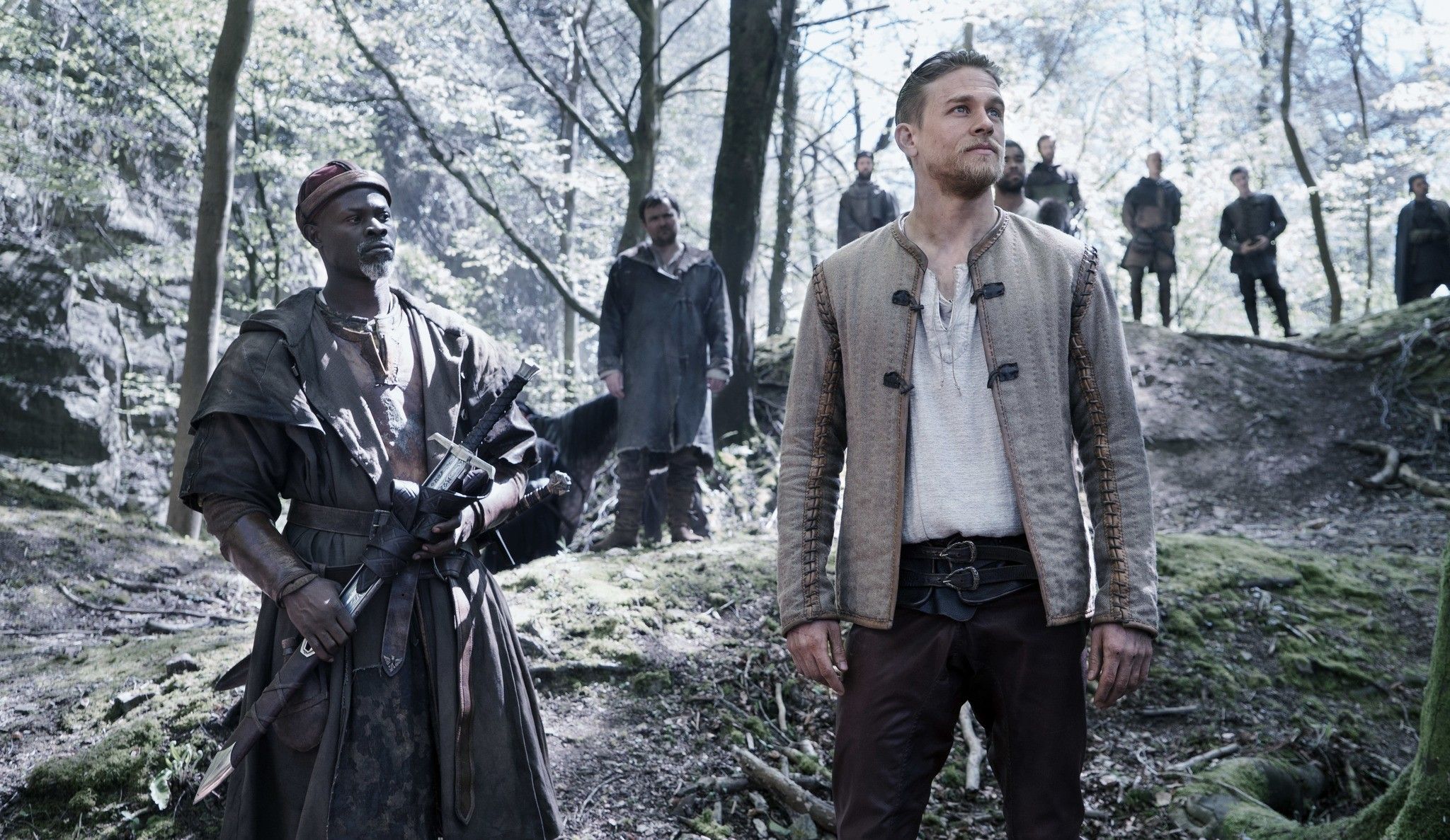
Mere weeks before the Dark Universe notoriously failed to launch with the 2017 release of Tom Cruise’s The Mummy, another announced franchise arguably face-planted even harder: Guy Ritchie’s King Arthur: Legend of the Sword. After all, The Mummy eked out $400 million worldwide based on Cruise’s star power, and though plans to go forward with a series of interconnected Universal Monster movies were scotched, those characters are powerful enough that they can’t really be killed. (In fact, you can visit the Dark Universe right this minute, if you’re so inclined.) King Arthur, on the other hand, made less than half of The Mummy’s box-office take, and was planned with just as much hubris. It was intended as the first in a six-movie cycle of Arthurian legend stories, culminating in a full Knights of the Round Table team-up. Legend of the Sword didn’t just tease a sequel that never got made; it was a full-scale medieval Avengers knockoff that couldn’t even fully assemble its furniture. (Literally. The movie’s last scene features an incomplete Round Table.)
Ritchie’s King Arthur is his most expensive failed franchise-starter, but far from his only one. The movie he made immediately before it was a long-gestating adaptation of the old TV show The Man from U.N.C.L.E., an origin-story team up between an American spy (Henry Cavill) and a Russian (Armie Hammer). It attracted a cult audience and still has plenty of fans, in spite of Hammer’s off-screen disgrace. But Warner Bros. wasn’t looking to make a franchise from a cult appreciation, and technically, U.N.C.L.E. made even less than King Arthur.(Though it didn’t have the attendant embarrassment of a six-movie plan attached to it.) While it built enough of a fandom for a sequel script to be written, an ongoing series failed to materialize.
After King Arthur, Ritchie seemed to finally find the box-office smash he was searching for, when his live-action remake of Disney’s animated smash Aladdin made a billion dollars worldwide. Disney made clear that a sequel was in the works, and the first movie’s success might well have allowed Ritchie a bit more freedom over the material and characters in a follow-up. But the project hasn’t happened, and it seems like Ritchie has moved on. He hasn’t had Sherlock Holmes to fall back on, either. The 2009 franchise-starter with Robert Downey Jr. and Jude Law never got past a single 2011 follow-up, presumably because Marvel called dibs on much of Downey’s time once The Avengers became a world-beating smash. King Arthur — which co-stars Law — seemed like an attempt at forging a new Brit-lit-based series that wouldn’t require negotiating with Disney over Downey’s schedule.
 Image: Warner Bros.
Conventional wisdom would say Ritchie tried like hell to get a big-studio franchise going throughout the 2010s, and was thwarted at every turn before finally and sensibly retreating to the smaller-scale thrillers and crime pictures he made his name on, starting with The Gentlemen in 2020. That’s more or less true, but complicated by one strange factor: Ritchie is pretty great at the art of franchise-starting, even though those franchises rarely proceed. He cultivated that skill in the 2010s and maintained it throughout his standalone 2020s work.
The Man from U.N.C.L.E. is exhibit A, in that (like The Nice Guys), it had fans consistently clamoring for a follow-up for years after it underperformed, eventually dissuaded only when Hammer’s public scandal reduced the possibility from slim to almost none. The movie is stylish, crisp, well-paced, and rooted in the personalities of the characters played by Cavill, Hammer, and Alicia Vikander — just the right balance between action movie and fashion shoot. Perhaps the most difficult element of franchise-starting is giving the audience enough for a satisfying experience while leaving them wanting more, but without making them feel as if the filmmakers are strategically withholding the good stuff.
Ritchie’s spy caper seemed to unlock something in him, because King Arthur: Legend of the Sword has a bit of that energy too. It’s a far more unwieldy movie, clearly attempting to serve multiple masters: Some of it is a gritty medieval drama with Jude Law as a tragically power-hungry king willing to sacrifice those he loves to maintain his lofty position. Some of it is a creature-feature fantasy version of King Arthur’s origin, featuring giant snakes and weird bat-monsters. And some of it is the laddish riff-raff version of Arthur and his cohort that you might expect from Ritchie’s early movies, with characters named stuff like Goosefat Bill, Wet Stick, and Kung Fu George, at least before they get knighted into more respectable monikers at the end.
Two of those three mashed-together movies are a lot of fun. Good as Law usually is, his portion of Legend of the Sword doesn’t fit especially well with the others, which is most evident in the protracted credits sequence where Ritchie cuts together on-screen text, flashback exposition, and a bunch of narrative throat-clearing. But once it gets going, Ritchie assembles some terrific passages: a montage to trace King Arthur’s hardscrabble childhood growing up in a brothel and scraping for gold coins; a grown-up Arthur (Charlie Hunnam) spinning a complicated, diced-up crime story in miniature; Arthur fighting his way across the “Darklands” at the urging of a female mage (Àstrid Bergès-Frisbey). These sequences, among others, successfully transpose Ritchie’s mischievous sensibility to a bigger action-fantasy canvas.
That’s not to say that King Arthur: Legend of the Sword creates a deep hunger to see five additional movies that only eventually assemble the Aven— er, Knights of the Round Table. It’s not a tragedy that the sequels will never exist, but the first movie does leave me with a general feeling that I could watch more of these characters’ antics in this world.
 Image: Lionsgate
Ritchie has continued to cultivate that feeling with many of the smaller films he’s made since. Though the hard-boiled revenge noir of Wrath of Man and the military drama of The Covenant are clearly intended to stand alone, he regularly makes team-on-a-mission movies that, like The Man from U.N.C.L.E., resemble less prohibitively expensive versions of James Bond or Mission: Impossible. Operation Fortune: Ruse de Guerre was barely seen back in 2023, but it’s splendid entertainment, and a streaming-chart fixture. It features Ritchie’s frequent collaborator Jason Statham as a government contractor who extracts Bond-like luxuries from his employers, assembling an IMF-like team that includes Aubrey Plaza as a sardonic comms expert and Josh Hartnett as an actor forced to go undercover as himself. It moves with precisely the lightness missing from so many bombastic blockbusters.
Ritchie’s 2024 project The Ministry of Ungentlemanly Warfare is basically a historical reskin of Operation Fortune crossed with an Inglourious Basterds knockoff that calls back to Richie’s early-career Tarantino debt. The movie also has more formal connections to U.N.C.L.E. (bringing back Cavill) and the Bond series (it’s based on real-life figures that include both Bond author Ian Fleming and, per the movie’s credits, the spy Fleming supposedly based the Bond character on). Ritchie probably didn’t intend for it to inspire sequels — the historical cards he drops at the end summarize everyone’s future real-life adventures — yet Cavill, Alan Ritchson, Eiza González, and Babs Olusanmokun, among others, have a no-fuss professional camaraderie that would make for a fine revisitation.
Instead, Ritchie seems to be making movies that feel like spiritual siblings to each other, by virtue of their similar premises, overlapping cast members, and jaunty but not obnoxious tones. His next film, for example, is In the Grey, which stars Cavill and González alongside Jake Gyllenhaal in a trio dynamic that looks similar to Man from U.N.C.L.E., with well-appointed mercenaries for hire who seem like they could easily work with Statham’s Orson Fortune.
 Image: Lionsgate
Between his 2010s big-studio work and his espionage-centric 2020s movies, one could assume that Ritchie wants something like what his old producer Matthew Vaughn pulled off with his Kingsman series, the second of which hit theaters not long after King Arthur bombed in 2017. Those movies very much resemble a Guy Ritchie-style blockbuster series: cheeky, violent, and quite English in their combination of smirky irreverence and gentlemanly respect for a certain class rigidity.
Yet in his search for a franchise of his own, Ritchie has become almost mature by comparison. See, for example, his treatment of his leading ladies, still laddish (Plaza and González both have moments of eye-candy glamour) yet clear in its overall respect for their characters’ professionalism and femininity. Then contrast this with the ending of the first Kingsman movie, a quasi-satirical Bond riff featuring anal-sex wish fulfillment.
Ritchie may not be iconoclastic enough to actually make fun of Bond pictures — or staid enough for anyone to hire him to direct a real one. Instead, much of Ritchie’s filmography now feels like his version of a Bond series — except that his version restarts with a rebooted Bond every time, rather than every four or five films. He’s turned the one-and-done failure to launch a franchise into its own popcorn art form.